Recently, despite increased revenue, Salesforce’s stock price plummeted by a staggering 25% in a single trading day. This dramatic decline has prompted numerous articles exploring why this software giant appears to be falling behind in the AI technology race.
As a former Technical Architect at Salesforce, I can pinpoint the internal reasons contributing to this issue.
In this article, I will share tangible insights not typically covered by other media platforms. Based on my experience, several factors impact the company’s ability to swiftly and effectively integrate AI into its offerings.
Complex Legacy Systems
Salesforce has developed a vast and intricate infrastructure over the years, comprised of various interconnected systems and services. These legacy systems, which are integral to Salesforce’s CRM offerings, are deeply embedded in the workflows of numerous organizations worldwide. This complexity makes the integration of AI technologies a challenging and costly endeavor. Modifying and updating these systems to incorporate new AI functionalities without disrupting existing services requires meticulous planning and execution.
Furthermore, ensuring compatibility and performance of AI applications within these systems is a significant challenge. Legacy systems often use outdated architectures and technologies, which may not be easily adaptable to modern AI solutions. Integrating AI capabilities into these systems can result in substantial technical debt and require extensive refactoring and testing to ensure stability and performance. Even if AI is developed, testing all possible scenarios may exceed the available resources.
Focus on Core Products
Salesforce has traditionally concentrated on enhancing its core CRM products and services. Shifting focus to AI necessitates a significant change in strategy and resource allocation. This strategic focus ensures that Salesforce continues to deliver high-value solutions to its customers, maintaining its market leadership in the CRM space. However, this emphasis on core products limits the resources and attention dedicated to emerging technologies like AI.
Transitioning to a more AI-centric approach requires a strategic shift and realignment of resources, which can be disruptive. This shift might involve retraining employees, reallocating budgets, and redefining product roadmaps, all of which take time and can slow down the adoption of AI technologies. Salesforce’s commitment to its core offerings ensures stability and continuity but can delay the pivot towards AI advancements.
Integration Challenges
Integrating AI into existing Salesforce platforms involves more than just embedding new technologies. It requires a seamless blend of AI functionalities with existing features to provide a cohesive user experience. This integration must ensure that AI solutions work harmoniously with existing tools and services without causing disruptions or performance issues.
Additionally, maintaining a consistent user experience while integrating AI is crucial. Ensuring that AI functionalities are intuitive and beneficial to end users adds another layer of complexity. This involves managing data consistency, handling dependencies between various systems, and addressing potential conflicts that may arise during the integration process. These technical challenges necessitate a careful and phased approach, which can slow down the overall AI adoption timeline.
Data Privacy and Security
Handling large volumes of data is intrinsic to AI development, but it also brings significant data privacy and security concerns. Salesforce, as a custodian of sensitive customer data, must adhere to stringent data protection regulations such as GDPR, CCPA, and other regional privacy laws. Implementing AI solutions while ensuring compliance with these regulations is complex and time-consuming.
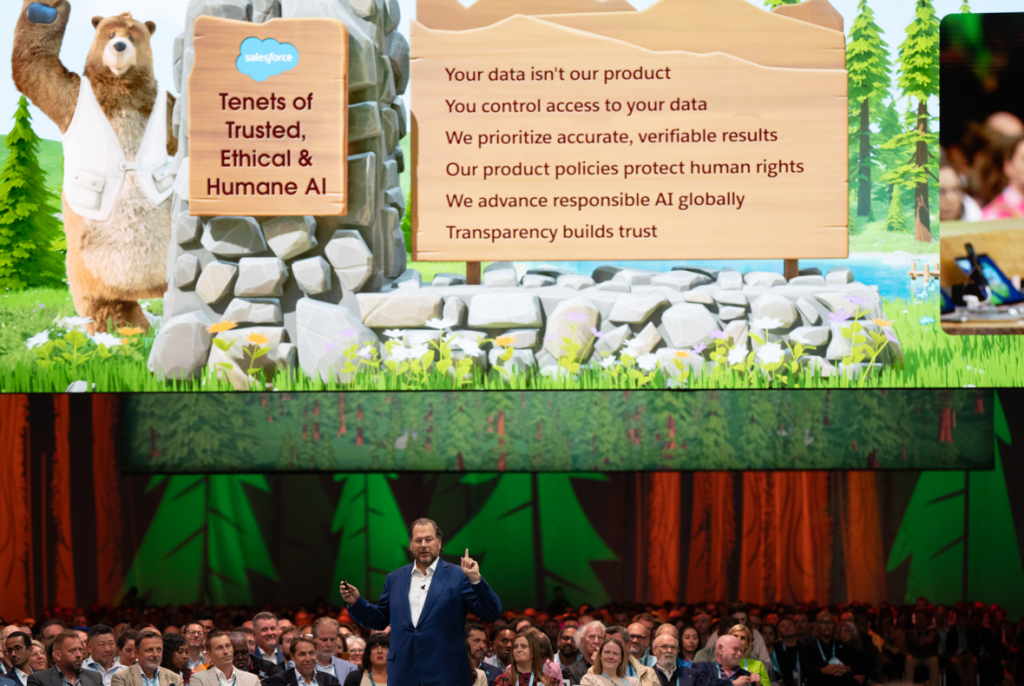
Moreover, AI systems require vast amounts of data for training and operation, increasing the risk of data breaches and misuse. Salesforce must implement robust security measures, including advanced encryption, access controls, and continuous monitoring, to protect this data. Balancing the need for data access with stringent security requirements can be a significant hurdle in accelerating AI development. Salesforce CEO Marc Benioff emphasizes data privacy, ensuring that customer data is never used to train AI tools without consent.
Talent and Expertise Gap
Despite having a large pool of developers, Salesforce faces a talent and expertise gap in specialized AI skills. AI development requires expertise in machine learning, deep learning, data science, and other related fields. Acquiring and retaining such specialized talent is challenging in a competitive job market where tech giants are competing for the same talent pool.
Building internal AI capabilities involves significant investment in training and development programs to upskill existing employees. Additionally, recruiting AI experts can be a lengthy and costly process. This talent and expertise gap slows down the pace of AI adoption as the company works to build the necessary skills and knowledge within its workforce.
Organizational Resistance to Change
Large organizations often face resistance to change, especially when it involves significant shifts in technology and processes. Adopting AI requires changes in workflows, processes, and even corporate culture. Employees accustomed to traditional methods might be resistant to adopting new AI-driven tools and technologies.
Managing this change involves not only technological adjustments but also addressing the human aspect. Salesforce needs to foster a culture that embraces innovation and continuous learning. Change management strategies, including effective communication, training programs, and incentivizing adoption, are crucial to overcoming this resistance. However, these initiatives take time to implement and bear fruit, contributing to the slower pace of AI adoption.
Regulatory and Ethical Considerations
The use of AI raises various regulatory and ethical concerns that Salesforce must navigate carefully. AI technologies can have significant implications for data privacy, bias, and transparency. Ensuring that AI solutions comply with existing regulations and ethical standards is paramount to maintaining customer trust and avoiding legal repercussions.
Salesforce must establish robust governance frameworks to oversee AI development and deployment, ensuring that AI applications are fair, transparent, and accountable. This involves creating ethical guidelines, conducting regular audits, and engaging with stakeholders to address concerns. The complexity of these regulatory and ethical considerations can slow down AI adoption as Salesforce works to ensure compliance and build ethical AI systems.
Strategic Prioritization
Salesforce operates in a highly competitive environment, with numerous strategic priorities vying for attention and resources. While AI is an important area of focus, it might not always be the top priority compared to other strategic initiatives such as expanding market share, enhancing core products, or pursuing acquisitions.
Balancing these competing priorities requires careful strategic planning and resource allocation. Salesforce must ensure that its AI initiatives align with its overall business objectives and provide tangible benefits to customers. This strategic prioritization process can slow down the pace of AI adoption as the company evaluates and integrates AI into its broader strategic framework.
Customer Readiness
The readiness of Salesforce’s customer base to adopt and integrate AI solutions into their operations plays a crucial role in the pace of AI development. Many customers might be hesitant to adopt AI due to concerns about complexity, cost, or uncertainty about the benefits. Salesforce must work to educate and prepare its customers for AI adoption, which can be a slow and gradual process.
This involves providing clear value propositions, demonstrating successful use cases, and offering support and training to help customers transition to AI-driven solutions. Ensuring customer readiness requires significant engagement and collaboration, which can impact the overall speed at which Salesforce can roll out AI capabilities.
Competitive Landscape
The competitive landscape in AI is intense, with numerous tech giants investing heavily in AI research and development. Companies like Google, Microsoft, and Amazon have made significant strides in AI, setting high benchmarks for innovation and performance. Salesforce must carefully navigate this competitive landscape to ensure its AI offerings are differentiated and provide unique value to customers.
This competitive pressure necessitates a cautious and calculated approach to AI adoption. Salesforce must invest in research and development to build robust and innovative AI solutions that can compete with those of its rivals. This strategic and methodical approach, while essential for long-term success, can slow down the immediate pace of AI adoption.
A Core Capability of Salesforce: Forging Strategic Partnerships
Salesforce has a strong track record of strategic partnerships with tech giants such as Oracle, Google, Microsoft, and Amazon. These partnerships significantly enhance Salesforce’s potential to deliver cutting-edge AI solutions. By leveraging the advanced AI infrastructures and technologies developed by these industry leaders, Salesforce can seamlessly integrate AI capabilities into its own offerings.
Collaborating with these tech giants allows Salesforce to accelerate the deployment of AI-driven solutions without needing to build everything from scratch. This approach enables Salesforce to tap into the vast resources, expertise, and innovations of its partners, ensuring that its customers benefit from the most advanced AI technologies available in the market.
Furthermore, these partnerships help Salesforce stay at the forefront of technological advancements. The synergy between Salesforce’s deep understanding of customer relationship management and the AI expertise of its partners creates a powerful combination that drives innovation and delivers superior value to clients.
While adaptation to AI integration may be complex and gradual, Salesforce’s ongoing efforts and strategic investments ensure that it will emerge as a leader in AI capabilities, driving forward the next wave of innovation in customer relationship management and beyond.
Mark Kara on Kara Finance | LinkedIn