Years ago, I transitioned from a full-time position at a leading tech company to pursue freelancing full-time. Prior to this, I dabbled in side projects and freelance work, but it wasn’t until July 2022 that I took it seriously.
Since then, I’ve had a steady stream of clients needing a Software Developer for various projects, ranging from 5-6 month contracts to year-long commitments. This journey has been enlightening, especially in how different the reality of freelancing is from the idealized version I had envisioned.
The common logic is that freelancing offers unparalleled freedom, financial benefits, and flexible work methods. I too dreamt of controlling my own schedule and doing what I wanted each day. However, the reality of freelancing has a challenging side that isn’t often discussed, leading me to reconsider the security of a regular job.
One major challenge of freelancing is the periods without clients, which can be financially straining. My first few years were great, with consecutive clients and extended contracts. However, there were times I’ve had no programming jobs for the consecutive five months, drastically affecting my income and lifestyle. Despite having passive income and side hustles, the financial gap is significant. Freelancers must prepare for these client droughts, as external factors like economic downturns can severely impact job availability.
Freelancing also requires managing your time and projects effectively. While I’ve always considered myself creative, there are days when generating ideas feels impossible. In a structured job, tasks are often clearly defined, which can be restrictive but also ensures consistent productivity. As a freelancer, convincing clients of your work’s value is crucial, and without the right pitch, opportunities can be lost.
Clients can be more demanding than a manager in a corporation, often expecting availability beyond standard work hours and additional tasks not outlined in the contract. This pressure to please clients can be overwhelming, especially when it impacts your main workload. Finding the right job offer that aligns with your skills and preferences is another significant challenge.
The notion of “freedom” in freelancing is often misunderstood. While you can choose your work hours, the necessity to meet deadlines, attend meetings, and complete tasks remains. You still need to report progress and be available during specific hours, which can sometimes mean working long days or dealing with emergencies outside regular hours. Unlike a full-time job where sick leave and vacations are paid, freelancers don’t earn if they don’t work, adding another layer of stress.
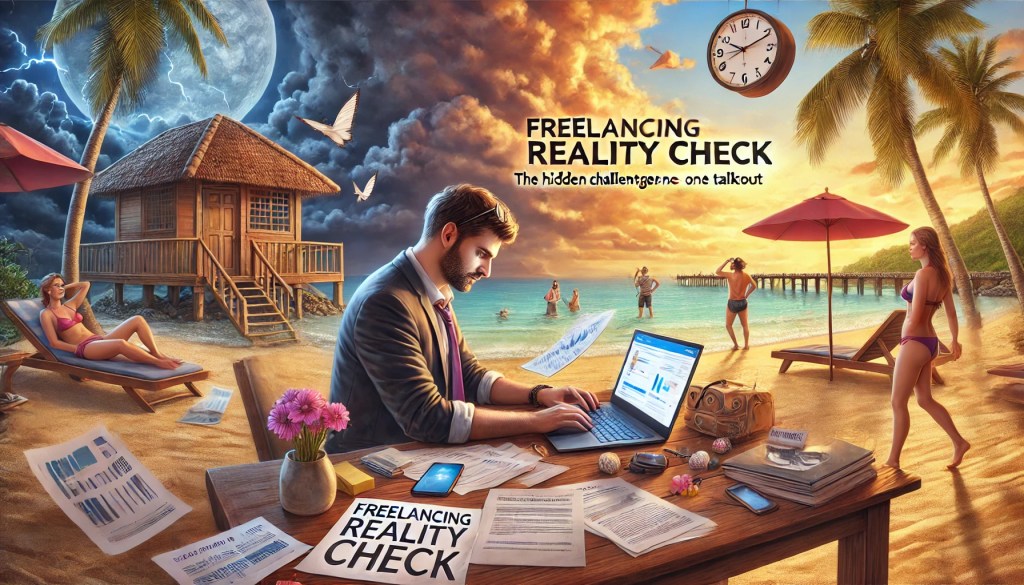
The idea of working from anywhere, such as a beach or foreign country, sounds appealing but is rarely practical. On trips, I found myself working instead of enjoying the destination, missing out on family time and experiences. The reality is that the beach or a foreign country becomes just another backdrop for your home office work.
Full-time workers with paid vacations can fully enjoy their time off, a luxury freelancers often can’t afford unless they have no active projects. These experiences taught me to manage my time and money more effectively, but also highlighted that no work arrangement is inherently superior. Both freelancing and full-time jobs have their advantages and challenges, and the best choice depends on individual goals and circumstances.
In the future, I might return to a regular office job for the stability of a steady paycheck, real vacations, and health benefits. This wouldn’t be a downgrade but a break from the intense demands of freelancing.