
By Tom Balmforth and Alexander Tanas
CHISINAU (Reuters) – Moldovan President Maia Sandu vowed to ring the changes after winning a runoff presidential ballot, an acknowledgement of the fragile foothold her pro-Western forces have ahead of key parliamentary elections next summer.
Sandu, who has pressed the ex-Soviet state’s bid to join the European Union, defeated a former prosecutor general backed by a traditionally pro-Russian party in a vote marred by allegations of election meddling by Moscow, which it denies.
The election also exposed underlying public grievances, and Sandu, who ended up with 55.33% of the overall vote, only won because of strong backing from Moldovans voting from overseas. Within the country’s borders, she lost by a narrow margin.
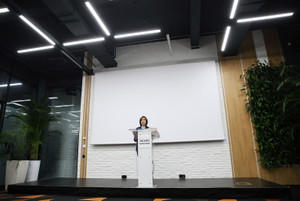
“I fully understand that this vote was also driven by the need for change – changes that society has been awaiting. I want you to know – I have heard all voices, including the critical ones,” Sandu said in a victory speech.
She pledged to be a “president for all of you”, asking citizens to look past their grudges and dissatisfaction and unite to protect the country, which she said had been targeted by mass interference at the election.
The Socialist Party that backed her rival in the contest, Alexandr Stoianoglo, said it did not view her presidency as legitimate, calling her the “president of the diaspora” and itself alleging widespread falsification.
Police and security officials have said millions of dollars of money poured in to buy people’s votes, part of a plot by Moscow and pro-Russian fugitive oligarch Ilan Shor to skew the election. Shor also denies any wrongdoing.
As Sunday’s vote unfolded, Sandu’s security adviser pointed to reports of Moldovans being brought on organised transport from Moscow to polling stations abroad as well as bomb hoaxes at European polling centres possibly aimed at disrupting voting.
Sandu’s victory was met with a sigh of relief in Brussels, a week after Georgia, another ex-Soviet state seeking EU membership, re-elected a ruling party regarded in the West as increasingly pro-Russian.
“The amount of election interference is striking and a warning sign for what’s to come in countries inside and outside of the EU. For now this is a welcome dose of good news,” one EU diplomat told Reuters.
(Additional reporting by Felix Hoske in Chisinau and Lili Bayer in Brussels; Editing by Mike Collett-White and Gareth Jones)


